
RAG Systems
8 min read
Why most RAG Systems Fail in Production
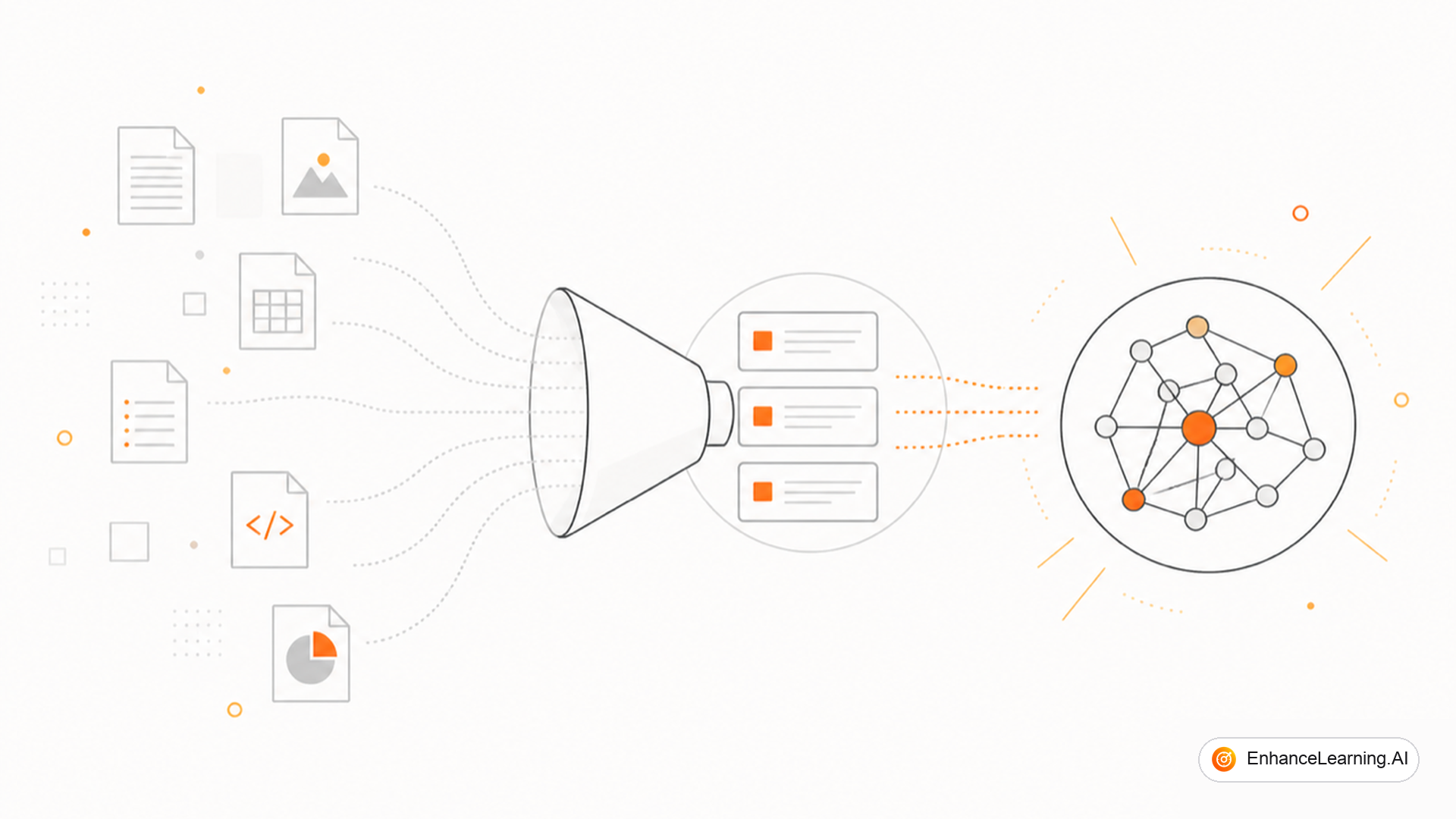
Where production RAG breaks: chunking mistakes, retrieval that looks fine in demos, missing reranking, and evaluation that never measures answer faithfulness.
Read articleArchitecture Intelligence for AI-Native Systems
A practitioner-grade resource for engineers and architects designing, evaluating, and implementing production-grade Agentic AI systems.
Opinionated research and implementation-ready guidance across agents, retrieval, context, memory, evaluation, and governance.
Turn emerging AI research into practical engineering insights and architectural decisions.
Choose the right system architecture, patterns, and trade-offs before implementation begins.
Build reliable AI-native systems with production-ready workflows, retrieval, memory, and orchestration.
Measure quality, enforce guardrails, and validate system behaviour before and after release.
Deploy, scale, observe, and operate AI-native systems with confidence in production.
Continuously improve reliability using traces, evaluations, feedback loops, and performance insights.
EnhanceLearning.AI transforms fast-moving AI research into practitioner-grade architectures, implementation guidance, and engineering references that teams can discuss, review, implement, evaluate, and continuously improve.
Practitioner-grade reference architectures for agents, RAG, memory, evaluation, and AI-native systems.
Compare architectural approaches, understand engineering trade-offs, and choose the right design before implementation begins.
Practical implementation guides for building reliable AI-native systems from prototype to production.
Follow proven patterns for orchestration, retrieval, context engineering, tool integration, guardrails, and deployment.
Engineering standards, certification pathways, and decision frameworks for AI-native teams.
Build shared engineering practices with repeatable evaluation methods, architecture reviews, and implementation standards.
Comprehensive frameworks for measuring quality, reliability, safety, and production readiness.
Evaluate systems using golden datasets, judge models, trace analysis, benchmarking, and human review.
Guidance for operating AI-native systems securely, reliably, and at enterprise scale.
Address governance, observability, security, cost, compliance, scalability, and operational ownership.
Progress from free research to interactive blueprints, and implementation resources.
Begin with articles and unlock premium architectures, implementation tools, and guided learning experiences.
“As enterprises transition from software-centric operating models to AI-native enterprises, EnhanceLearning.AI is the practitioner-grade reference for architects, engineers, and technology leaders designing the next generation of AI-native systems.”
Our articles connect product goals to architectural decisions - from orchestration and retrieval to context engineering, memory, tool integration, evaluation, and production operations.
Agents
Autonomous workflows & decision-making
Context
Context engineering & prompt orchestration
Memory
Short-term & long-term memory systems
Evaluation
Automated evaluation & quality assurance
Governance
Policies, guardrails & access controls
Observability
Traces, telemetry & production monitoring
The core disciplines of AI-native engineering.
Reference architectures for designing production-grade AI-native systems.
Autonomous agents, planning, reasoning, and multi-step execution workflows.
Model architectures, capabilities, selection, benchmarking, and optimisation for LLMs, embeddings, vision, and audio models.
Retrieval pipelines, indexing, reranking, and knowledge grounding.
Context assembly, prompt orchestration, token optimisation, and dynamic context management.
Short-term memory, long-term memory, semantic profiles, and persistent state.
Agent collaboration, coordination, delegation, and communication patterns.
Proven implementation patterns including ReAct, Planner–Executor, Router, Reflection, and Critic.
Structured outputs, tool calling, workflows, guardrails, reliability, and engineering best practices.
Inference platforms, model gateways, caching, scaling, GPU infrastructure, and API management.
Workflow orchestration, human approval, long-running execution, retries, and state management.
Evals, judge models, tracing, telemetry, benchmarking, and production monitoring.
Identity, permissions, prompt security, compliance, governance, and policy enforcement.
Standards and patterns for secure communication between AI systems and external tools.
AI operating models, organisational adoption, Centres of Excellence, and AI transformation.
Curated deep-dives on the AI-native topics practitioners search for most.
Where production RAG breaks: chunking mistakes, retrieval that looks fine in demos, missing reranking, and evaluation that never measures answer faithfulness.
Read article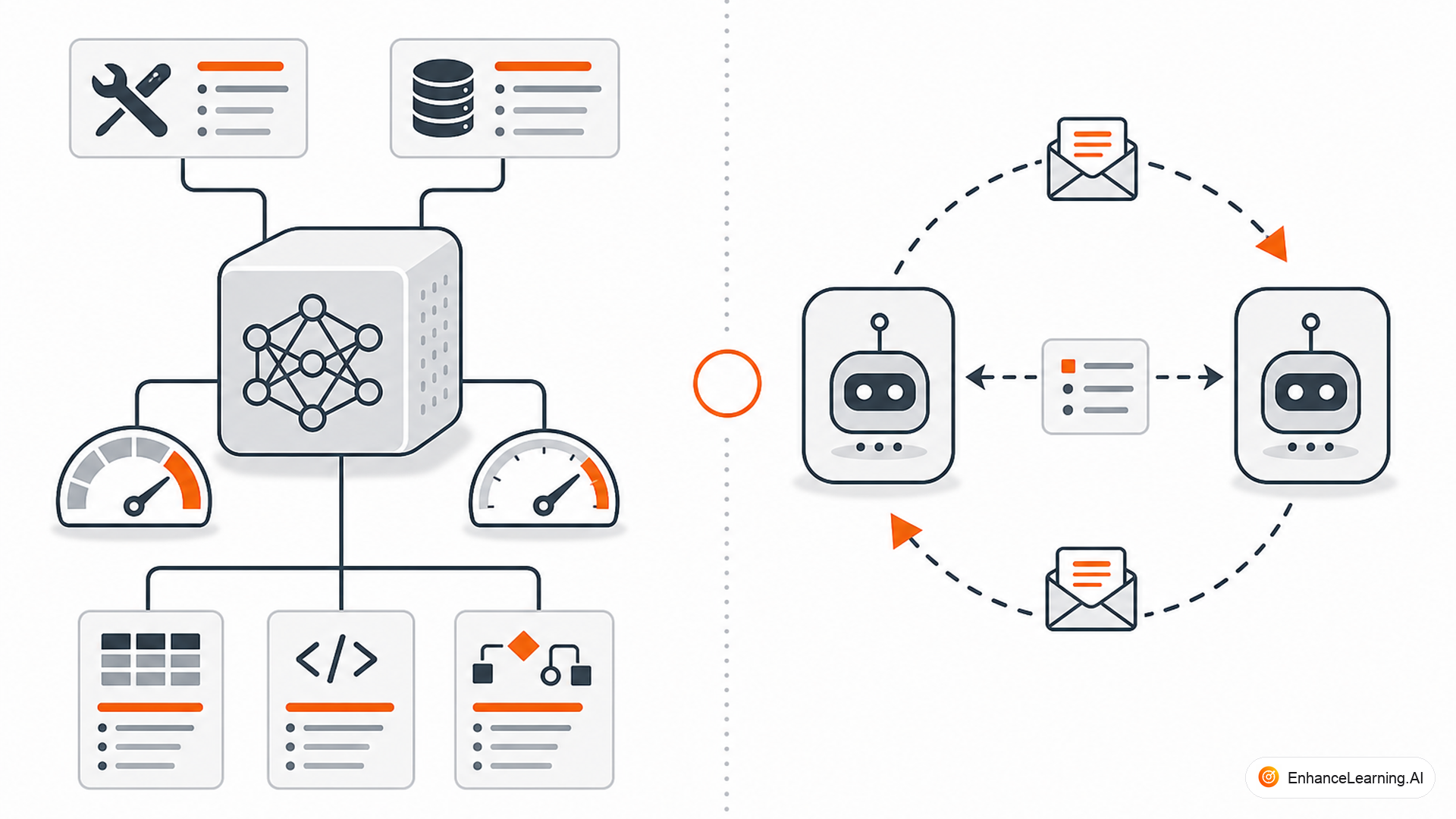
MCP standardizes tool and context access for model hosts; A2A protocols coordinate agents — conflating them leads to wrong architecture choices.
Read article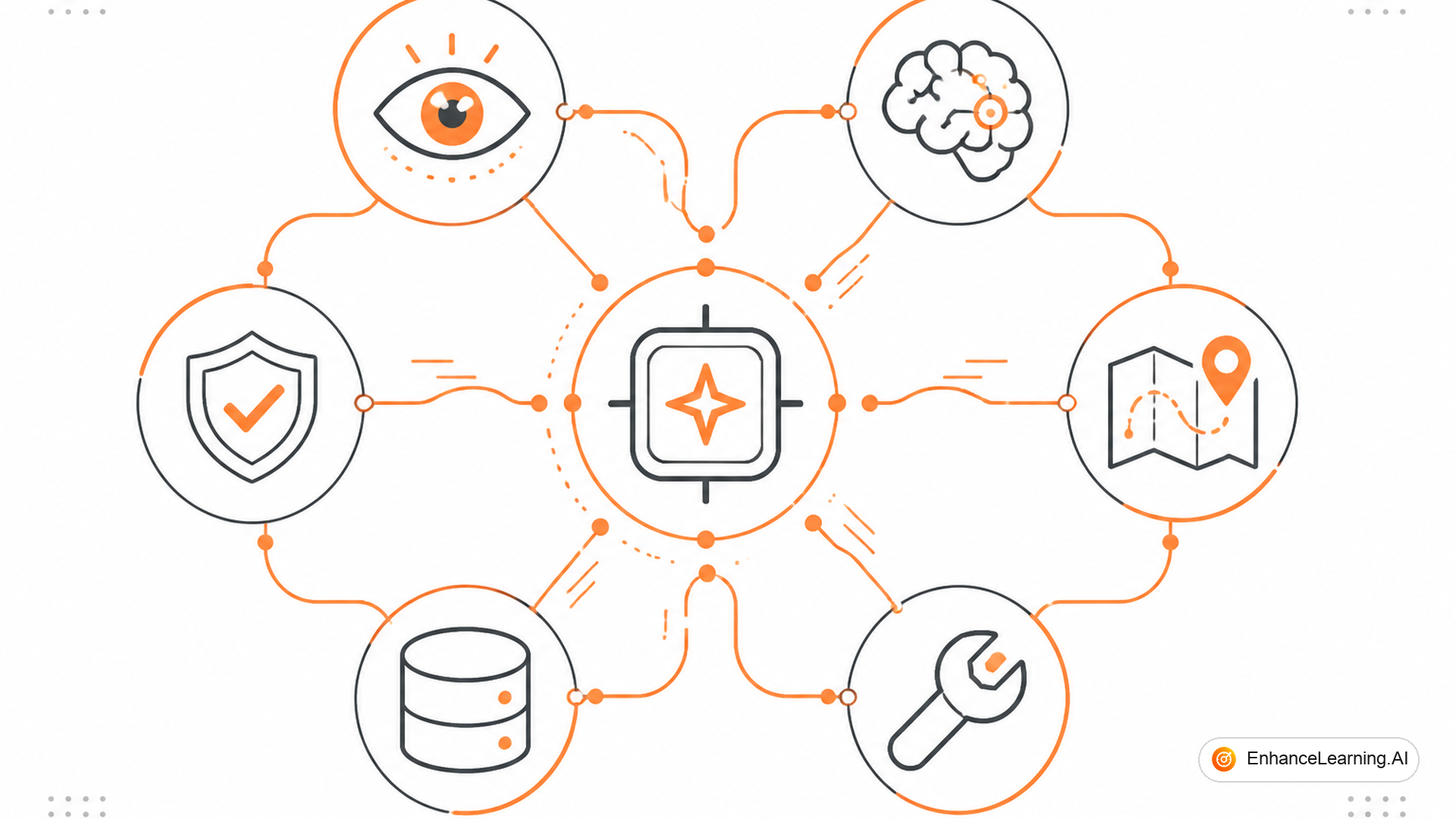
Core parts of a real agentic system—perception, reasoning, planning, action, state, and bounds—and how they fit in production architectures.
Read article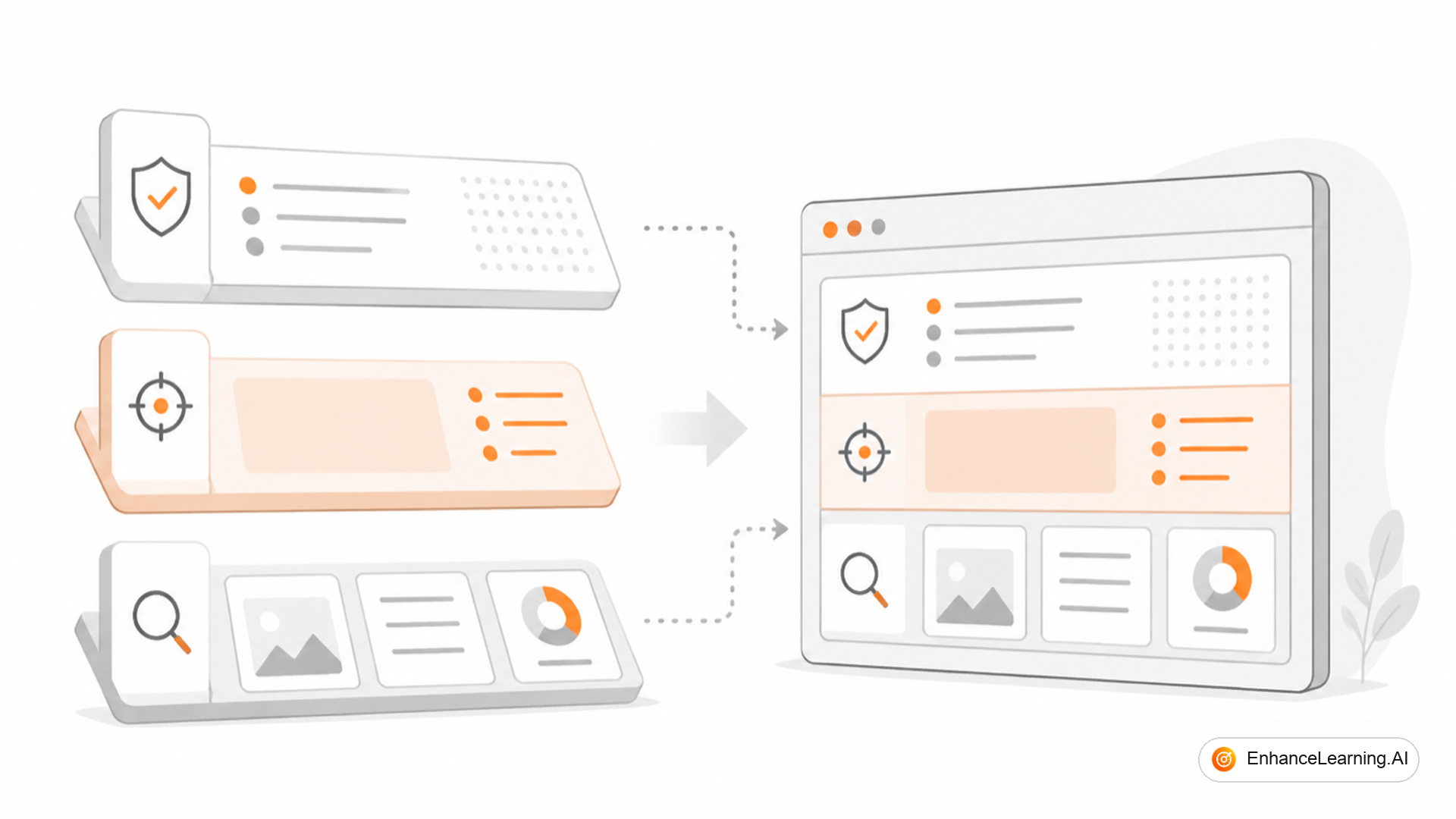
Prompt patterns that hold up in production: role and contract design, few-shot selection, structured outputs, tool-aware prompts, and context budgets that do not leak.
Read article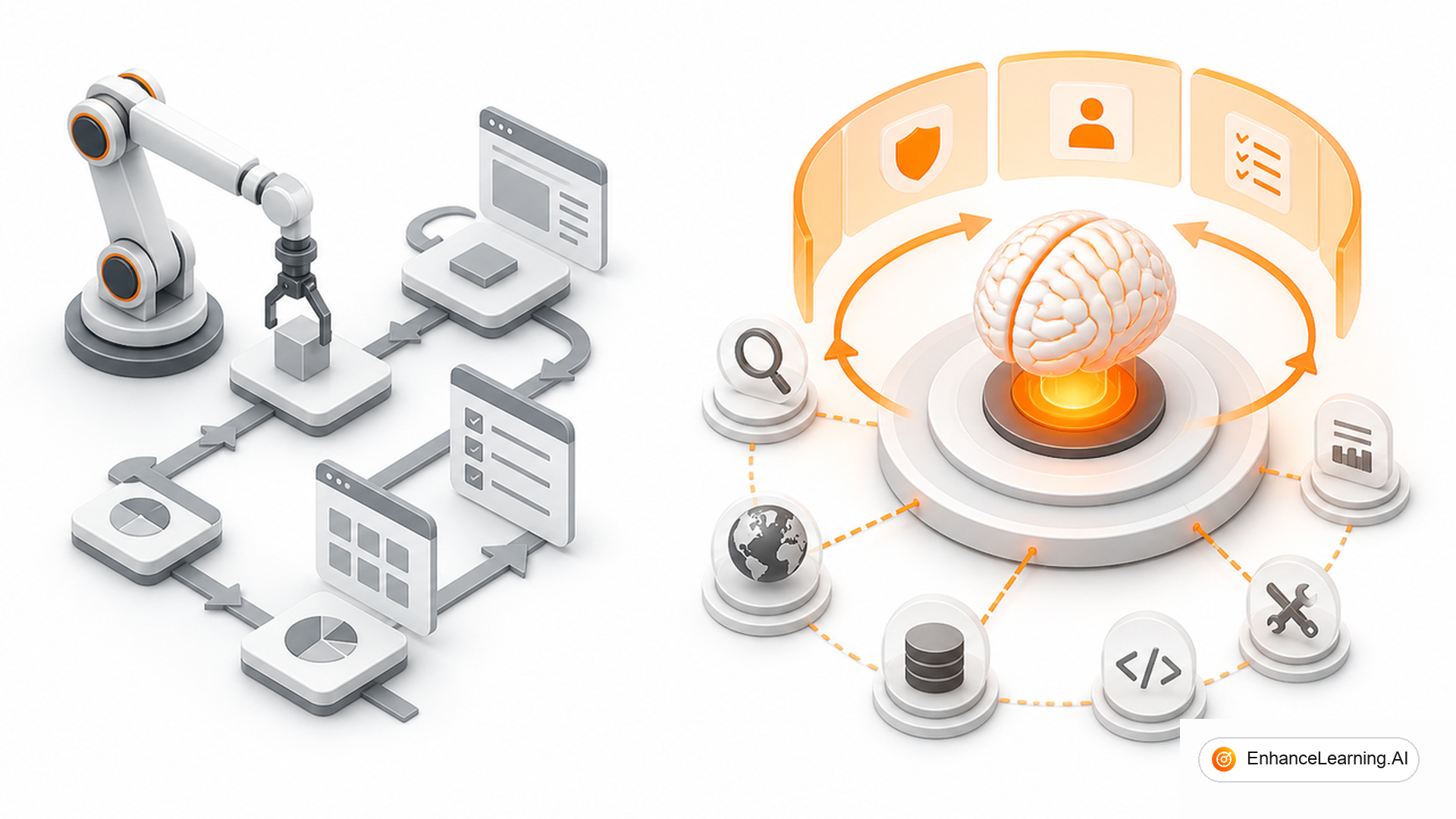
How agentic reasoning differs from RPA bolted to an LLM — and why that misconception picks the wrong controls, evals, and failure modes.
Read article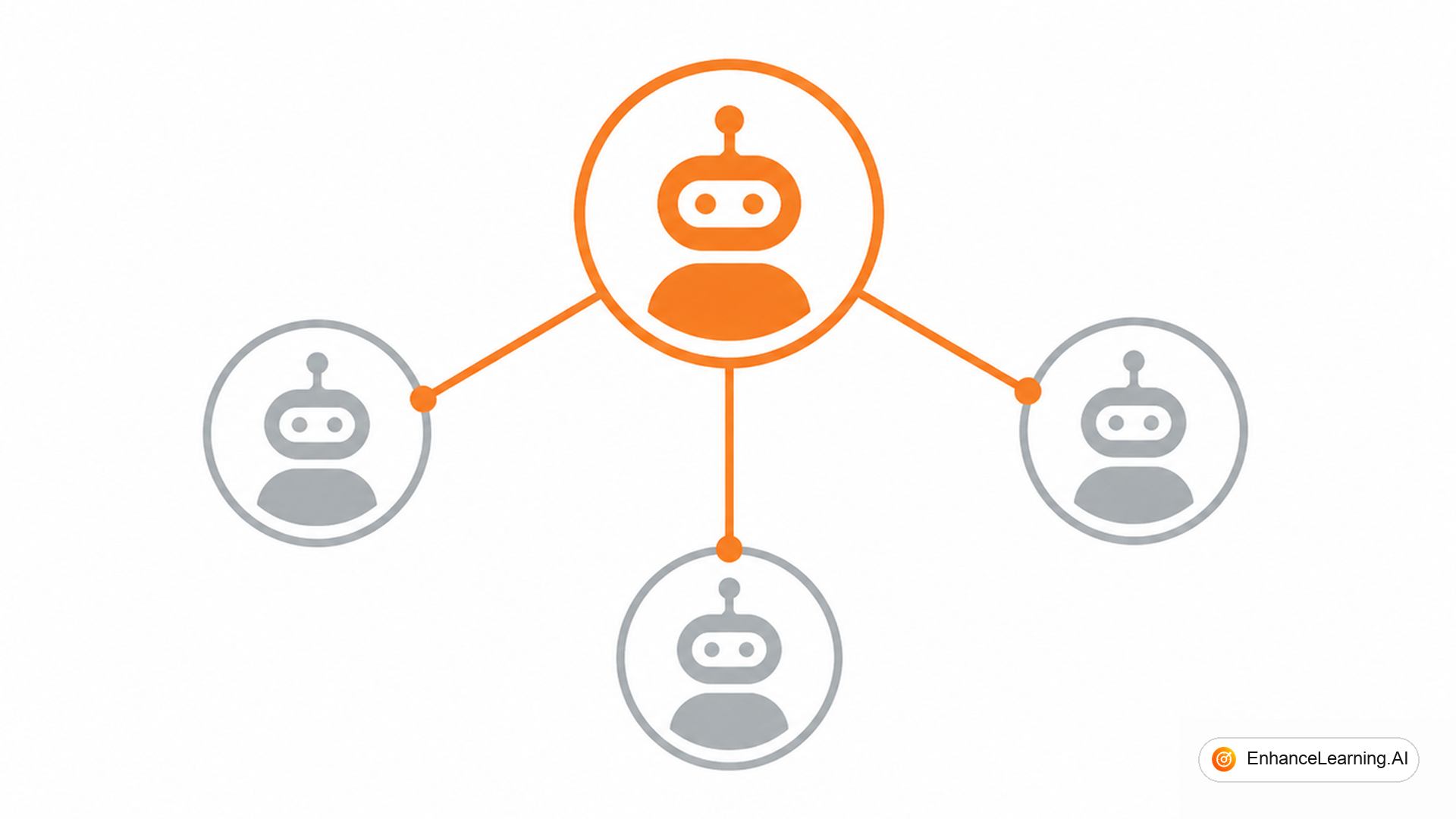
When multi-agent systems pay off—and when one bounded agent with good tools is the better production architecture.
Read article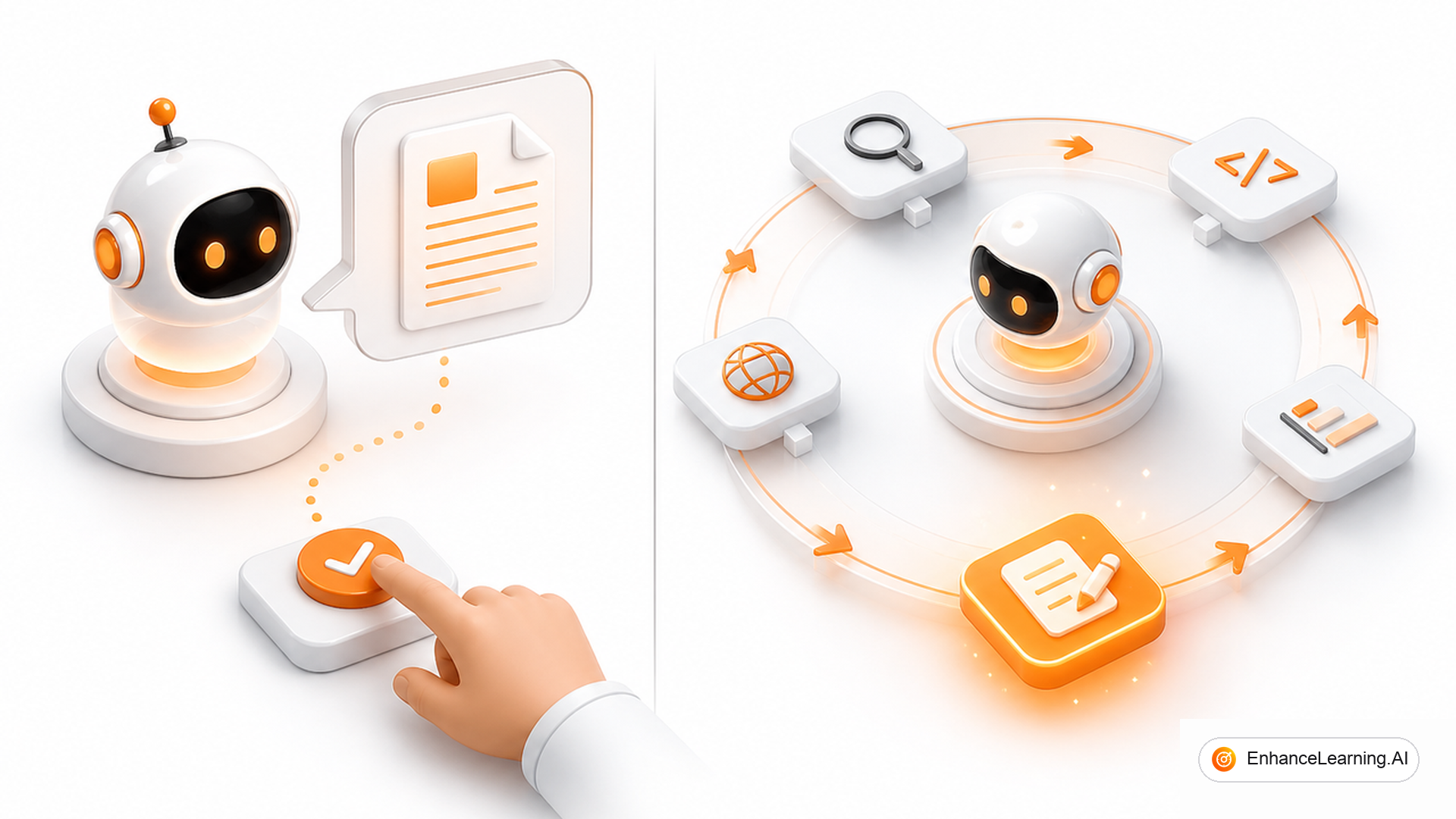
Where suggestion ends and independent action begins in AI-native systems — a precise boundary teams use loosely but rarely define in architecture reviews.
Read article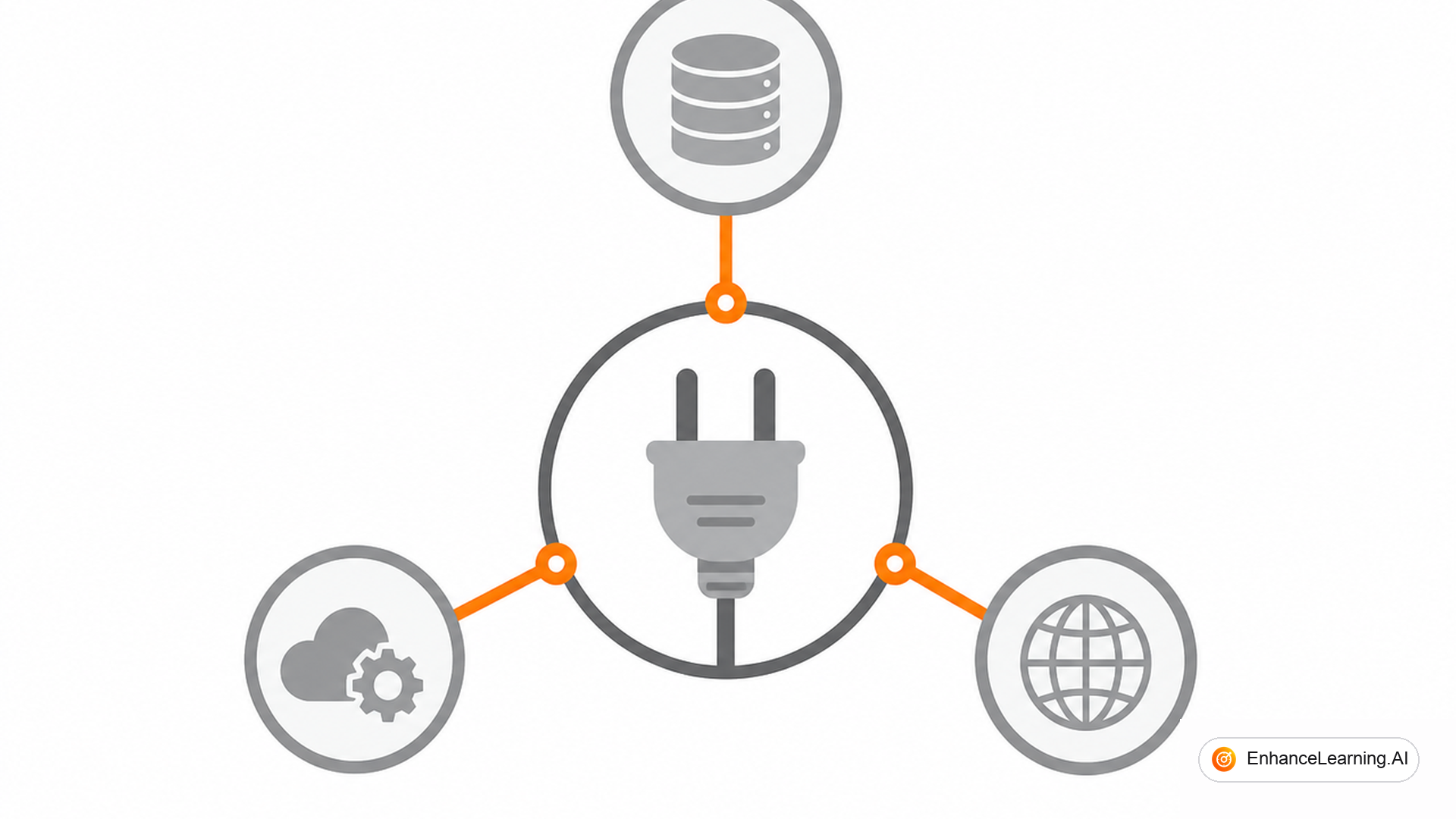
How Model Context Protocol standardizes AI tool and context access — one server model, many hosts, with policy still enforced at the edge.
Read article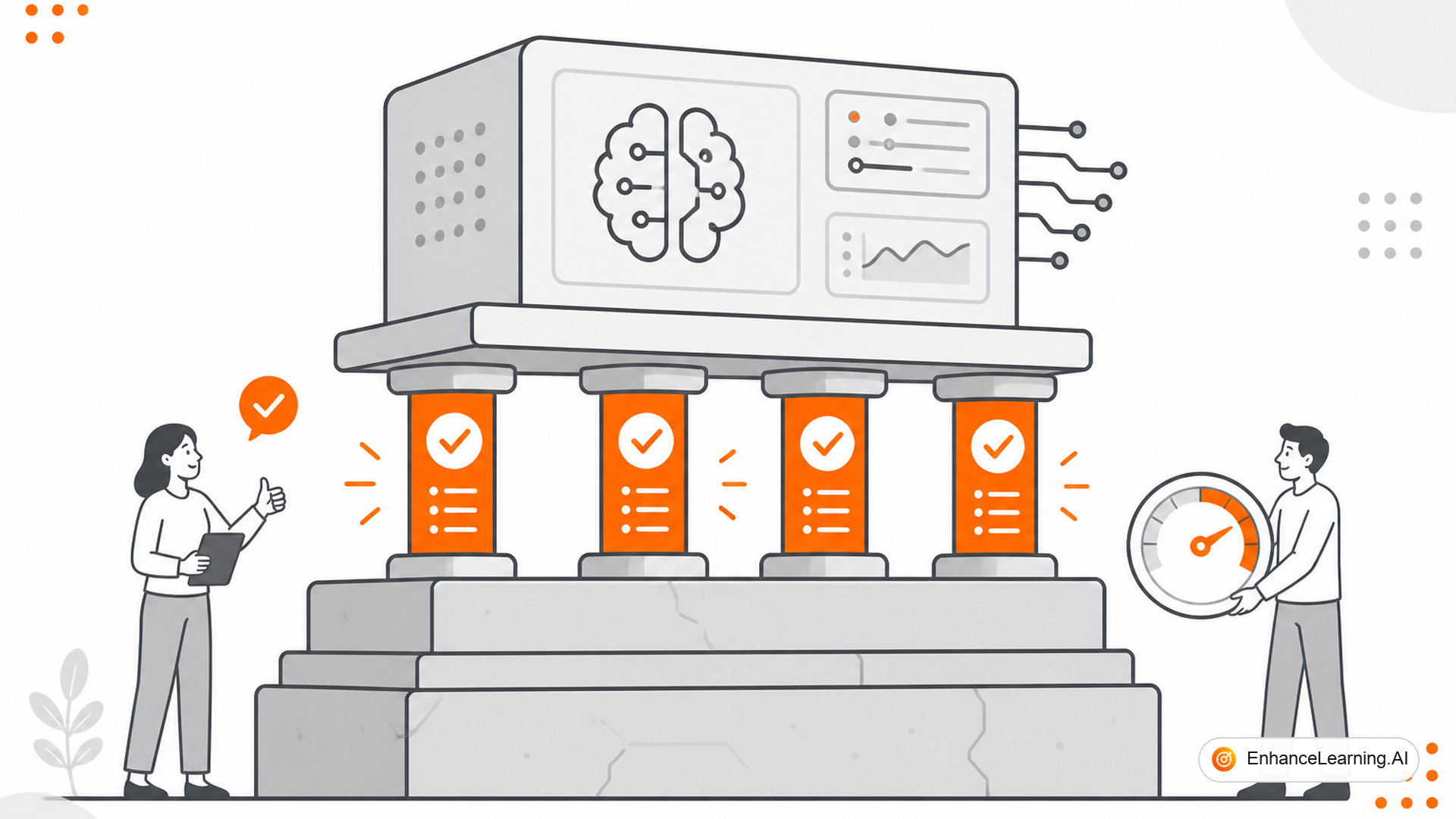
Probabilistic AI cannot earn enterprise trust without evaluation. Why evals are the prerequisite for shipping, scaling, and defending AI-native systems.
Read article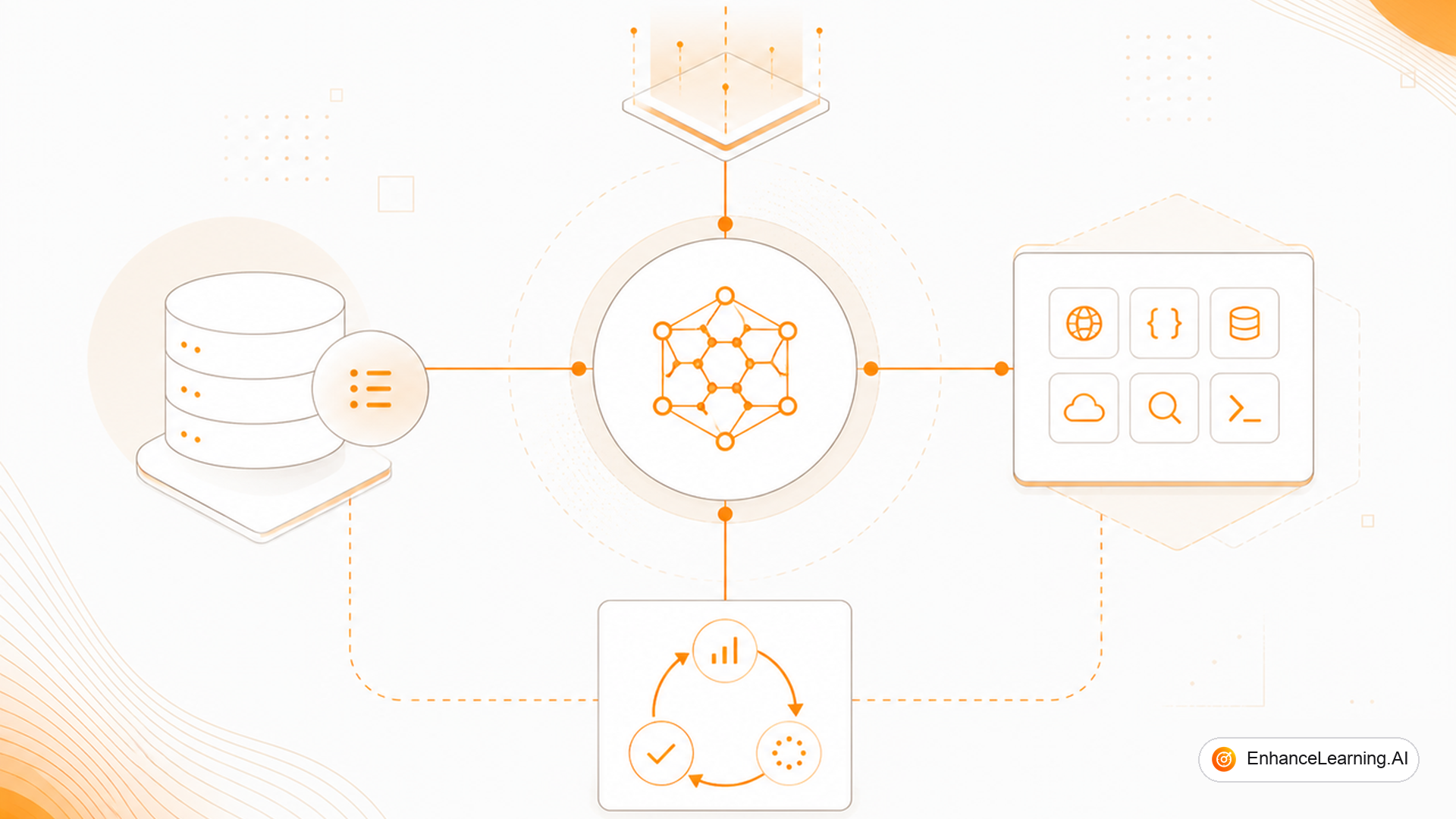
A practical definition of AI-native architecture: five properties that separate bolted-on model features from systems designed around probabilistic control.
Read articleLaunching soon, the EnhanceLearning.AI Platform will extend our practitioner-grade research with interactive architectures, intelligent engineering assistants, and implementation resources for production AI-native systems.
Register for early access and be among the first to explore architectures, blueprints, and implementation playbooks.
Everything you need to know about EnhanceLearning.AI - who it's built for, what it covers, and what's coming next.
AI-native describes systems designed around the capabilities and constraints of AI from the start. Instead of treating AI as a feature, AI-native systems make models, context, memory, tools, evaluation, governance, and human oversight fundamental parts of the architecture.
EnhanceLearning.AI is built for software engineers, architects, AI engineers, engineering leaders, technical founders, and enterprise technology teams designing, building, and operating production-grade AI-native systems.
Our public library of articles is freely available. The upcoming premium platform will provide interactive architecture blueprints, AI engineering assistants, implementation playbooks, and team-focused learning experiences.
The EnhanceLearning.AI Platform is currently in development and is planned to launch in the coming months. Join the waitlist to receive early access invitations, product updates, and launch announcements.
We publish when new architectural patterns, engineering practices, and implementation insights have demonstrated real value in production. Our focus is quality, practicality, and long-term relevance.
Most AI content explains models or follows industry news. EnhanceLearning.AI focuses on practitioner-grade engineering guidance—reference architectures, implementation patterns, production trade-offs, evaluation frameworks, and system design for AI-native systems.
No. If you're an experienced software engineer or architect, the content is designed to help you develop AI-native engineering intuition. As topics become more advanced, they progressively explore production architectures, evaluation, observability, governance, and enterprise-scale system design.
No. Our guidance is vendor-neutral and centred on durable engineering principles that apply across foundation models, orchestration frameworks, cloud providers, vector databases, and AI tooling ecosystems.